

Comparing Travel Insurance Plans Side-by-Side sets the stage for this enthralling narrative, offering readers a glimpse into a story that is rich in detail and brimming with originality from the outset. It delves into the intricacies of various travel insurance plans, shedding light on key features, coverage details, and factors for comparison.
Understanding Travel Insurance Plans
When it comes to travel insurance plans, it is important to understand the key features, types of coverage, and common exclusions to make an informed decision before your trip.
Key Features of Travel Insurance Plans
- Emergency medical coverage for illnesses or injuries while traveling
- Trip cancellation and interruption coverage due to unforeseen events
- Baggage loss or delay coverage for your personal belongings
- Travel delay coverage for unexpected delays during your trip
- 24/7 assistance services for emergencies while traveling
Types of Coverage Offered
- Medical Coverage: Covers medical expenses, emergency medical evacuation, and repatriation.
- Trip Cancellation/Interruption: Reimburses non-refundable trip expenses if you need to cancel or cut short your trip.
- Baggage and Personal Belongings: Provides coverage for lost, stolen, or damaged luggage and personal items.
- Travel Delay: Offers reimbursement for additional expenses due to travel delays.
- Emergency Assistance: Offers 24/7 emergency assistance services, such as medical referrals and travel arrangements.
Common Exclusions in Travel Insurance Policies
- Pre-existing medical conditions not disclosed at the time of purchasing the policy
- Travel to high-risk countries or regions with travel advisories
- Engaging in extreme sports or activities not covered by the policy
- Losses due to alcohol or drug-related incidents
- Acts of war, terrorism, or civil unrest in the travel destination
Factors for Comparison
When comparing travel insurance plans, there are several key factors to consider that can greatly impact the coverage and cost of the policy. Understanding these factors is crucial in making an informed decision that meets your specific needs.
Coverage Limits Variation
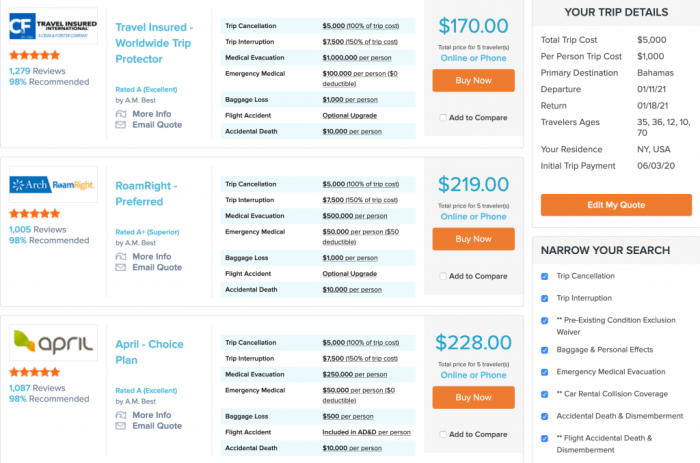
Coverage limits can vary significantly between different travel insurance plans. It is essential to carefully review and compare these limits to ensure they align with your travel requirements. For instance, some plans may have higher coverage limits for medical expenses or trip cancellations, while others may offer more limited coverage in these areas.
By assessing the coverage limits of each plan, you can determine which one provides the most comprehensive protection for your trip.
Significance of Deductibles
Deductibles play a crucial role in travel insurance plans as they impact both the cost and coverage of the policy. A deductible is the amount you are required to pay out of pocket before the insurance coverage kicks in. Generally, plans with higher deductibles tend to have lower premiums, but this means you will have to cover more expenses upfront in the event of a claim.
On the other hand, plans with lower deductibles may have higher premiums but provide more extensive coverage from the start. It is important to evaluate your budget and risk tolerance to determine the most suitable deductible for your travel insurance needs.
Side-by-Side Comparison Method
When comparing travel insurance plans side-by-side, it’s essential to have a clear and organized way to evaluate the different features, coverage details, and costs. One effective method is to design a table template with columns specifically for these key aspects.
Table Template for Comparison
| Plan Features | Coverage Details | Cost |
|---|---|---|
| Emergency Medical Coverage | Coverage limits, exclusions, and deductibles | Annual premium or per-trip cost |
| Trip Cancellation & Interruption | Reasons covered, reimbursement limits | Any additional fees or optional coverage |
| Baggage Loss/Delay | Reimbursement limits, documentation required | Compare deductibles and claim process |
Interpreting Side-by-Side Comparison
When analyzing the information presented in a side-by-side comparison of travel insurance plans, focus on the specifics of each plan’s features, coverage details, and costs. Look for differences in coverage limits, exclusions, deductibles, and any additional fees that may apply.
Consider the overall value offered by each plan based on your individual travel needs. A plan with higher premiums may provide more comprehensive coverage, while a lower-cost plan might have limitations that could impact your trip.
Additional Benefits and Add-Ons
When comparing travel insurance plans, it’s essential to consider the additional benefits and add-ons that may be offered to enhance your coverage.
Common Additional Benefits
- Emergency medical coverage for illnesses or injuries while traveling
- Baggage delay or loss coverage for reimbursement of essential items
- Trip interruption coverage for unexpected events that force you to cut your trip short
- Travel assistance services for help with emergencies or travel-related issues
Importance of Add-On Options
Add-on options such as “cancel for any reason” coverage can provide increased flexibility and peace of mind. This type of coverage allows you to cancel your trip for reasons that may not be covered under standard policies, such as fear of traveling due to unforeseen events.
Enhancing Protection with Add-Ons
For example, adding on a rental car collision coverage to your travel insurance plan can ensure you are protected in case of an accident while driving a rental car during your trip. This additional benefit can save you from having to pay out of pocket for damages and provide a sense of security while on the road.
Wrap-Up
In conclusion, Comparing Travel Insurance Plans Side-by-Side provides a detailed roadmap for making informed decisions when selecting the right travel insurance plan. By understanding the nuances of coverage options, factors for comparison, and additional benefits, travelers can embark on their journeys with confidence, knowing they are well-protected.
Detailed FAQs
What are some common exclusions in travel insurance policies?
Common exclusions in travel insurance policies may include pre-existing medical conditions, adventure sports activities, and acts of war or terrorism.
How do deductibles impact the overall cost and coverage of travel insurance plans?
Deductibles in travel insurance plans affect the out-of-pocket expenses that the policyholder must pay before the insurance coverage kicks in. Choosing a higher deductible can lower the premium cost but may require paying more upfront in case of a claim.
What are some common additional benefits offered by travel insurance plans?
Common additional benefits may include coverage for trip cancellations, lost baggage, emergency medical expenses, and 24/7 travel assistance.